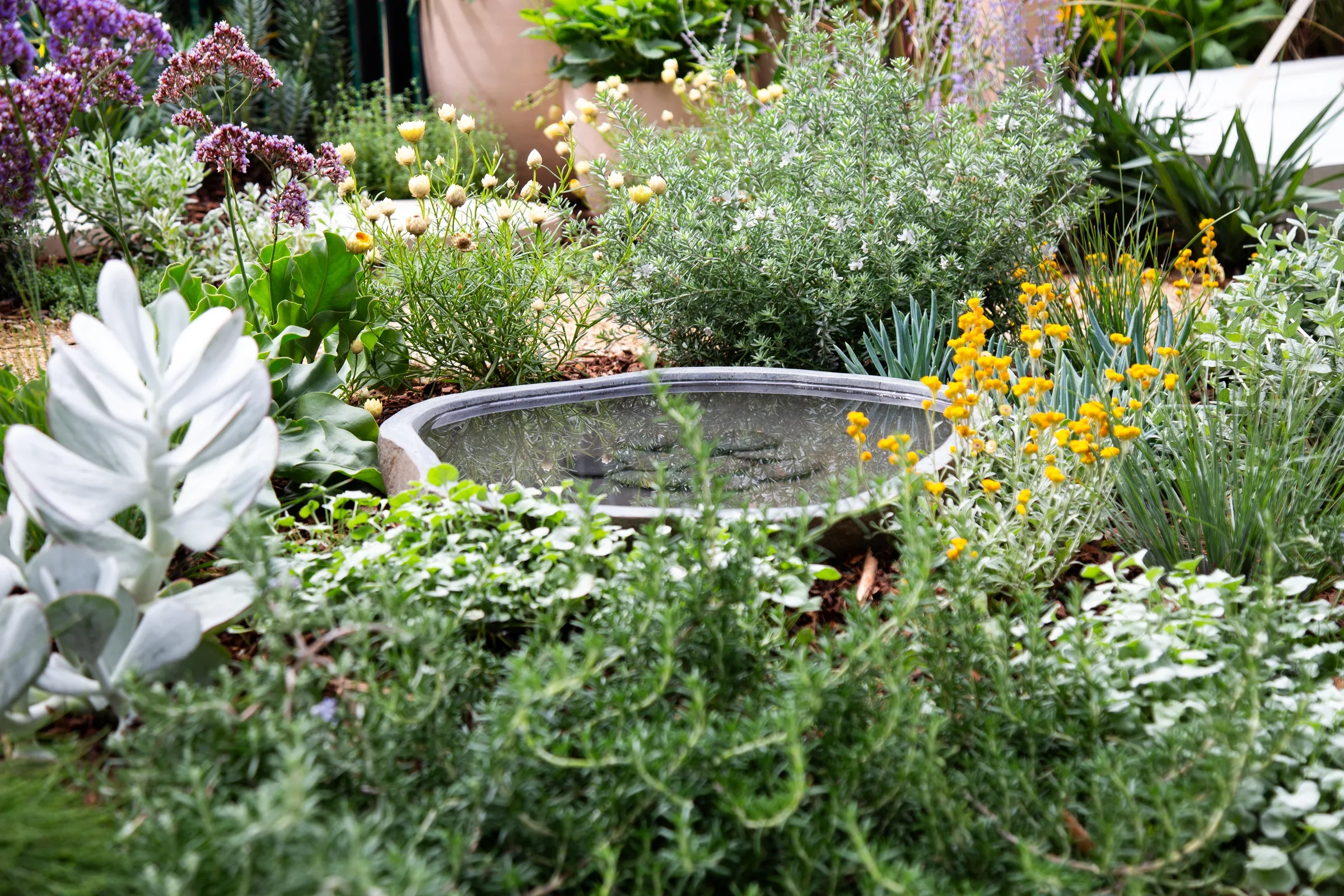
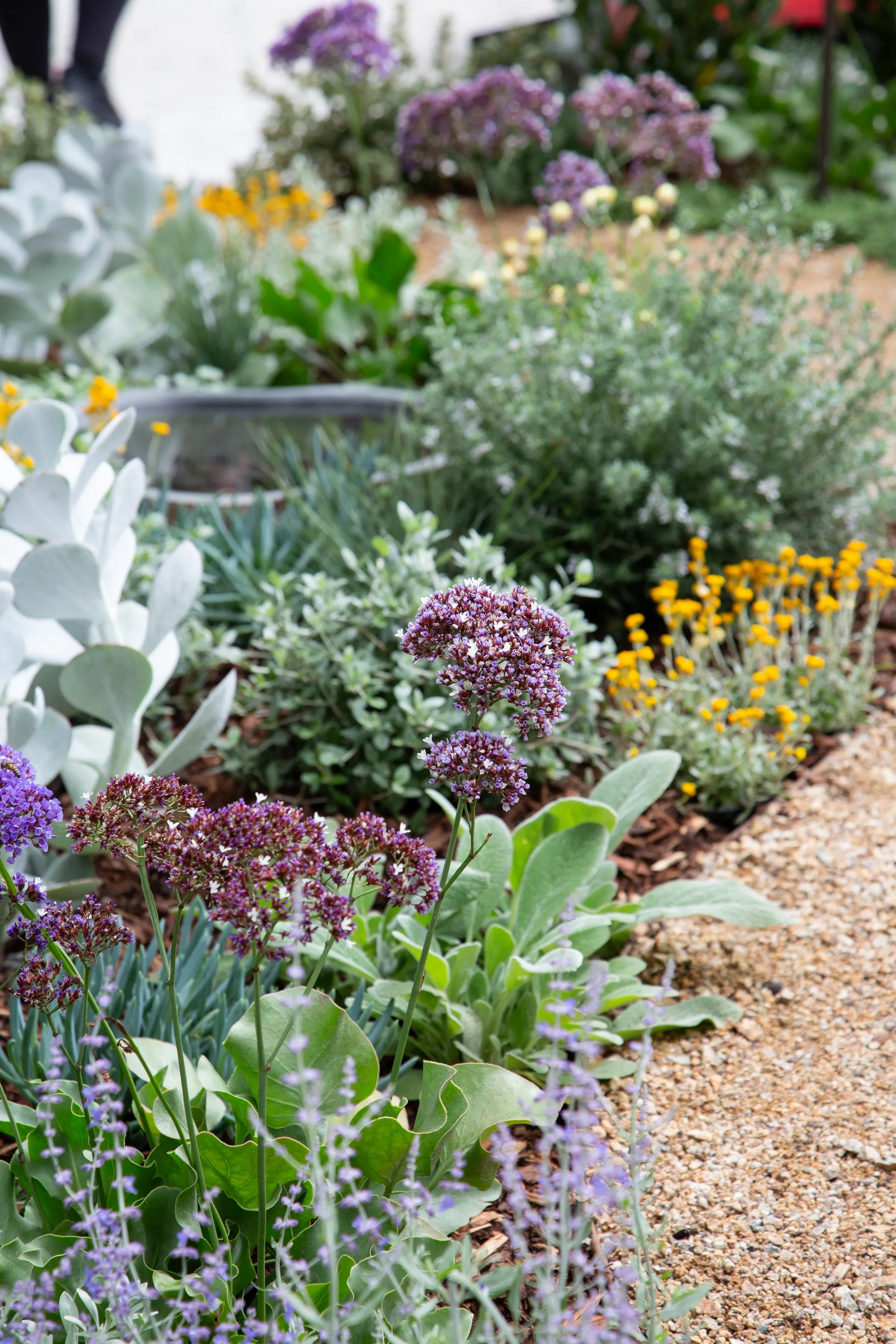
Pinterest Has Changed Garden Design.
NOT IN THE WAY YOU THINK.
The hard part of garden design isn't finding inspiration anymore. It's knowing what to do with it.
Clients rarely hire a garden designer because they can't find inspiration. They hire one because they don't know what to do with it.
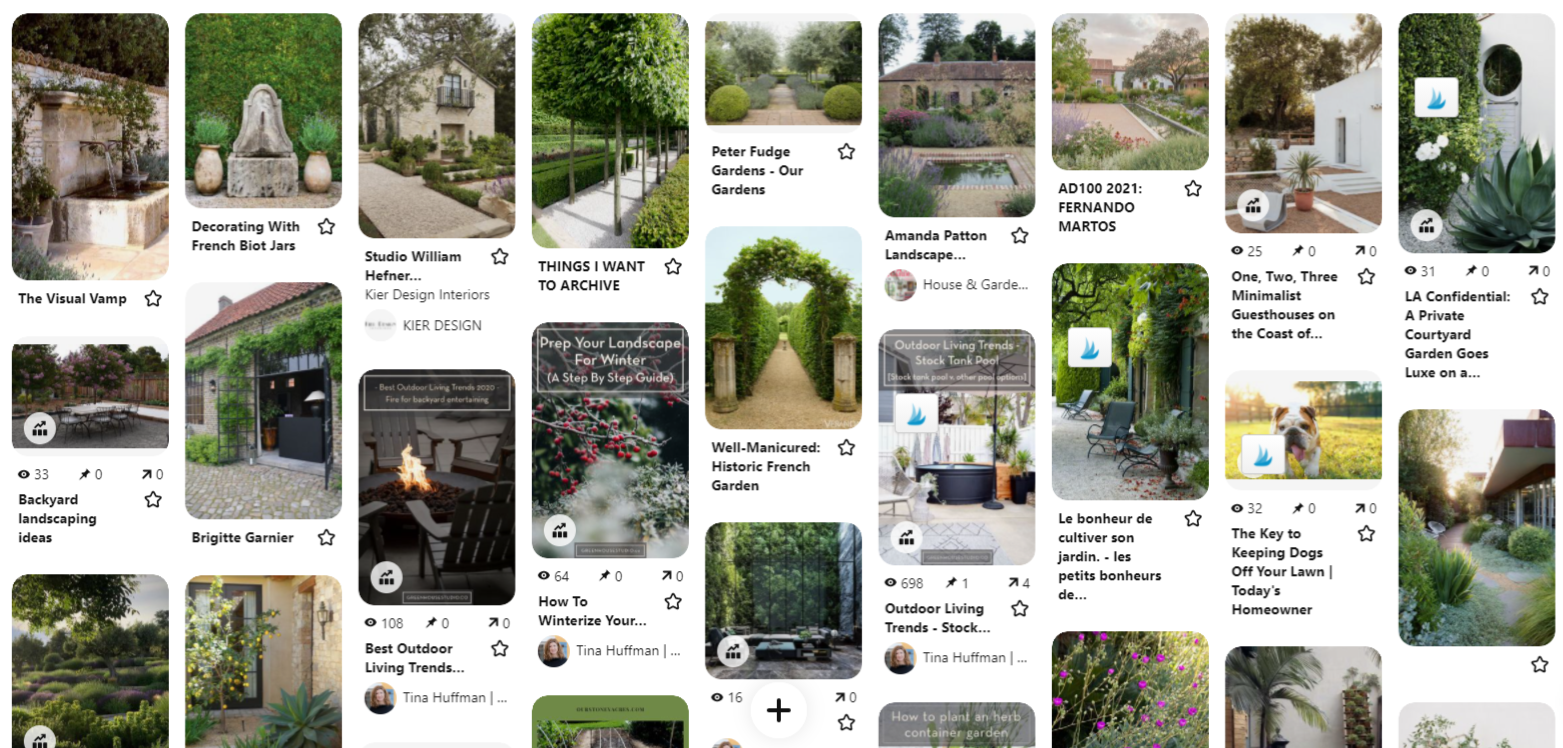
Walk into almost any garden design meeting today and, before anyone discusses budgets, planting or materials, someone will eventually open Pinterest. Hundreds of images appear on screen. Gardens from Australia, Europe, Japan and California. Contemporary landscapes alongside Mediterranean courtyards. English borders beside Japanese-inspired planting. Clients often apologise for how random the collection appears, assuming they're handing over a confusing assortment of ideas.
Experienced designers rarely see randomness.
“Most clients think they're bringing me a design brief," says Brent Reid. "They're not. They're bringing me clues.”
It is perhaps one of the biggest changes social media has brought to the profession. Clients no longer struggle to communicate what they like. In fact, they often arrive with more inspiration than any previous generation of homeowners ever could.
The challenge is that inspiration isn't the same as a design brief.
Inspiration has never been more accessible. Interpretation has never been more important.
Pinterest has transformed access to inspiration, but it hasn’t transformed the fundamentals of good garden design. If anything, the designer’s role has become more valuable because today’s challenge isn’t finding ideas. It’s understanding which ideas matter, why they resonate and how they should be interpreted for a particular place and a particular client.
The role of the designer hasn't changed. What they're valued for has.
This is one of the least visible parts of a garden designer's work. Clients understandably focus on the finished image. Designers are trying to understand the thinking behind it.
A collection of Pinterest images rarely reveals a preferred style. More often, it reveals recurring instincts. One client may consistently save gardens filled with filtered light. Another is drawn to spaces that feel enclosed and private. Someone else repeatedly gravitates towards restrained planting palettes, natural materials or landscapes where architecture quietly dissolves into the garden.
Individually, the images may appear unrelated. Together, they begin to reveal something much more interesting.
"The first question I'm asking isn't, 'What style do they like?'" Brent explains. "It's, 'What keeps showing up?' I'm looking for the common thread because that's where the real design brief begins."
That common thread rarely describes a style. More often, it describes a feeling.
People don't necessarily save a Mediterranean courtyard because they want olive trees. They may be responding to the sense of enclosure, the softness of filtered light or the quiet relationship between the house and the landscape. Likewise, a contemporary Australian garden may evoke exactly the same emotions through entirely different materials and planting.
The designer's role isn't to recreate either garden. It's to understand why those images resonate in the first place.
That distinction has become increasingly important as inspiration has become almost limitless. Clients are no longer asking designers to show them what's possible. They're asking designers to help them make sense of the possibilities already sitting on their phones.
Good designers don't collect inspiration. They investigate it.
For Andrew Fisher Tomlin, this doesn't represent a fundamental shift in how designers learn. It simply reflects how inspiration is now discovered.
"Designers have always learned from other gardens, books and travel," he says. "Social media has broadened the availability of places and ideas that designers can follow up by exploring websites and then making visits to these places."
The important phrase is follow up. Experienced designers rarely stop at the image itself. A photograph is the beginning of an investigation, not the conclusion. It prompts questions rather than answers. Why does this garden work? How has it changed over time? How does it respond to its climate? Which ideas belong to this particular place, and which can be thoughtfully reinterpreted somewhere entirely different?
Once you learn to see, you can't unsee.
Inspiration has always been part of garden design just like interpretation has always been the profession. That process of questioning sits at the heart of what we teach at LCGD Australia.
One of the most rewarding parts of teaching garden design is recognising the moment a student's perspective begins to shift.
It rarely happens all at once. Instead, it emerges gradually. Students stop asking whether they like a garden and begin asking why it works. They become less interested in collecting ideas and more interested in understanding the decisions behind them. Why does one space feel calm while another feels unresolved? Why does your eye naturally move in one direction? How do planting, materials, architecture and light work together to create an emotional response?
The questions become more sophisticated because the way they observe becomes more sophisticated.
At LCGD Australia, we often describe this as developing designer eyes, but perhaps it's more accurately described as a permanent shift in perception.
Once students begin thinking this way, they rarely switch it off. A walk through a botanic garden becomes an opportunity to study movement and sequence. A holiday becomes a chance to observe how landscapes respond to climate, culture and geography. Even an ordinary suburban street starts revealing lessons in proportion, planting and spatial relationships that previously passed unnoticed.
Whether that learning happens during a visit to Royal Botanic Gardens Cranbourne, through a live online walkthrough with students joining from across Australia and New Zealand, or while analysing projects together in class, the objective is always the same.
The location isn't the lesson. Learning how to see is.
It's also why students are encouraged to seek inspiration well beyond gardens themselves. Architecture, art, travel and everyday objects become starting points for original thinking because creativity isn't about reproducing what already exists. It's about recognising ideas, understanding them deeply and responding to them in a way that is unique to a particular place and a particular client.
"Taking inspiration and putting your own twist on it is how great design evolves," Brent says. "The danger comes when people copy what they see without understanding why it works. Gardens aren't successful because of one path, one tree or one beautiful detail. They're successful because every decision works together."
Pinterest hasn’t made garden designers less important. It has made judgement more valuable.
Perhaps that's the biggest misconception about Pinterest - It hasn't made garden designers less important. If anything, it has made judgement, observation and interpretation more valuable than ever.
Every generation of designers has borrowed ideas from those who came before them. What has changed is the sheer volume of inspiration now available to us.
More than ever, the role of a garden designer lies not in finding ideas, but in recognising the right ones, understanding why they matter and transforming them into a landscape that couldn’t belong anywhere else.
Inspiration has never been easier to find. Learning what to do with it is where design begins.
And once you learn to see that way, you never really stop.